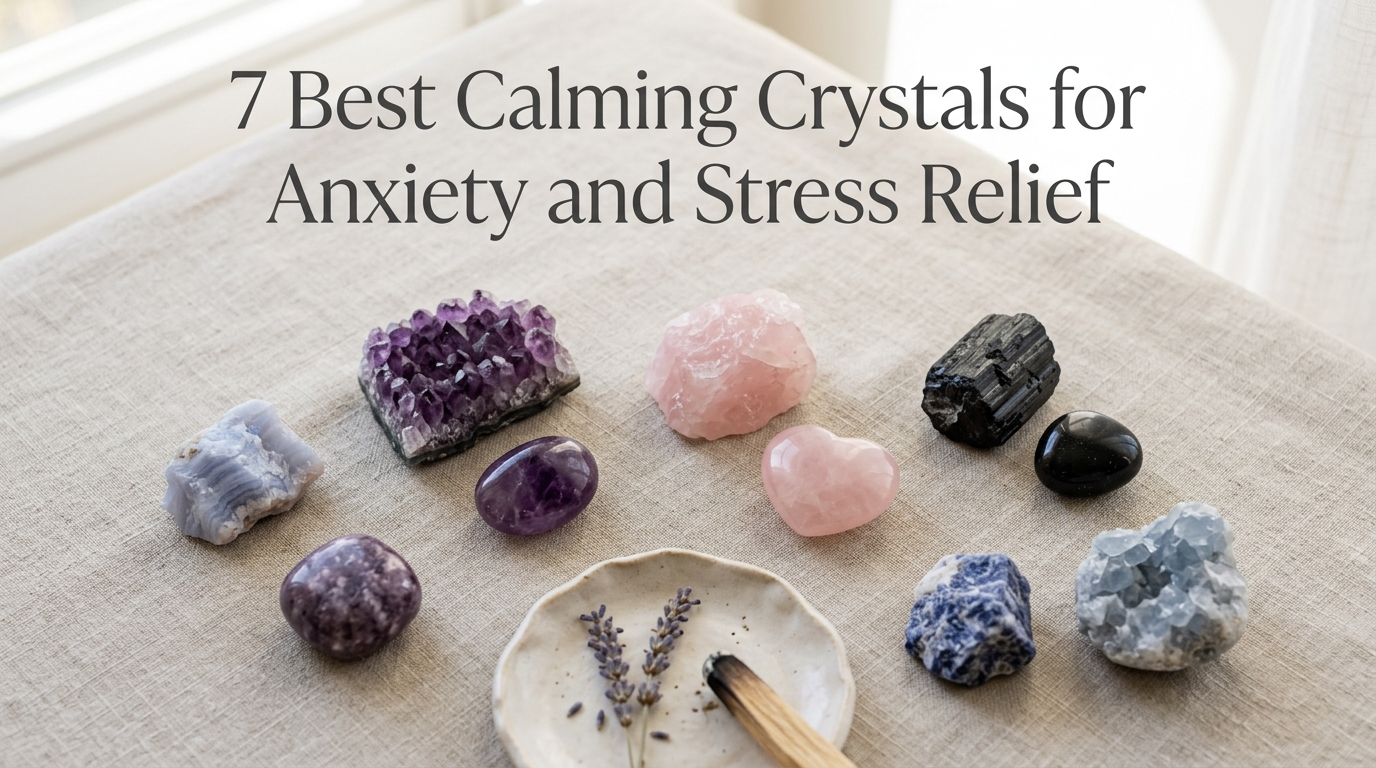
7 Best Calming Crystals for Anxiety and Stress Relief
Anxiety affects how people think, feel, and act in daily life. Many individuals now explore complementary tools like calming crystals to support emotional balance. These natural stones are often used alongside practices such as Mindfulness and grounding techniques to create a sense of stability and calm.
This guide explains what calming crystals are, how they work, and how to use them effectively. It also highlights the seven most popular crystals used for stress relief today.
More at: How to Choose Crystals: A Complete Beginner's Guide
What Are Calming Crystals for Anxiety?
Calming crystals are natural minerals that people use as supportive tools for emotional regulation, especially when dealing with Anxiety and stress. These crystals are not medical treatments. Instead, they act as physical objects that help individuals focus, relax, and build calming routines.
People often associate crystals with grounding practices. A grounding object gives the mind something stable to focus on during overwhelming moments. This process helps reduce mental clutter and brings attention back to the present moment.
From a practical perspective, calming crystals function as symbolic anchors. They remind users to pause, breathe, and reconnect with their emotional state. This makes them useful in mindfulness-based stress management strategies.
As understanding their role becomes clearer, it is important to explore how these crystals actually support anxiety relief.

What Are Calming Crystals for Anxiety?
How Do Crystals Help Reduce Anxiety and Stress?
Crystals support anxiety relief through psychological, behavioral, and belief-based mechanisms. While scientific evidence remains limited, several logical processes explain their effectiveness.
Emotional Anchoring and Mindfulness Mechanism
A crystal acts as a focus object. When a person holds or observes it, the brain shifts attention away from anxious thoughts. This aligns with mindfulness practices, where attention to a single object reduces mental overload.
Sensory and Habit-Based Relaxation Effects
Crystals engage the senses. Their texture, temperature, and appearance create a calming sensory experience. Over time, repeated use forms a habit loop. The brain begins to associate the crystal with relaxation, making it easier to trigger calmness.
Energy Healing Perspective vs Scientific View
Some traditions suggest crystals influence energy fields. However, modern science does not confirm this claim. From a scientific standpoint, the benefits likely come from placebo effects, routine formation, and cognitive focus rather than measurable energy changes.
Understanding these mechanisms helps users approach crystals realistically while still benefiting from their calming potential. The next step is choosing the right crystal for specific anxiety needs.
How to Choose the Right Crystal for Anxiety Relief
Choosing a crystal involves aligning its perceived properties with personal emotional needs. A structured approach helps simplify the selection process.
Match Crystals to Anxiety Types
Different crystals are associated with different emotional challenges. For example, social anxiety may require calming communication-focused stones, while panic episodes may benefit from grounding crystals.
Color, Composition, and Emotional Associations
Color psychology plays a role in emotional perception. Blue tones often relate to calmness, while purple connects with introspection. Mineral composition also influences how people interpret a crystal’s purpose.
Personal Preference and Intuition
Personal connection matters. A crystal that feels visually or emotionally appealing is more likely to be used consistently. This consistency strengthens its calming effect through routine reinforcement.
With the selection framework established, the following section introduces the most effective calming crystals used today.

How to Choose the Right Crystal for Anxiety Relief
7 Best Calming Crystals for Anxiety and Stress Relief
The following are the 7 most effective calming crystals for anxiety relief based on emotional grounding properties, mineral composition, and common usage in stress-reduction practices.
1. Amethyst – Best for Overall Calmness
Amethyst is a purple quartz crystal widely associated with relaxation and mental clarity. It helps reduce overthinking by encouraging a calm and focused mindset. People often place amethyst near their bed or use it during meditation to improve sleep and reduce stress. For those looking to start, a high-quality dark amethyst tumble stone provides a simple and effective option for daily grounding.

Amethyst – Best for Overall Calmness
2. Rose Quartz – Best for Emotional Healing
Rose quartz is known as the stone of compassion and emotional healing. It supports self-love and reduces emotional tension. Individuals often wear rose quartz jewelry to maintain a steady sense of comfort throughout the day.
3. Lepidolite – Best for Panic and Mood Stabilization
Lepidolite contains natural lithium, which is commonly used in mood-stabilizing treatments. While the crystal itself does not deliver lithium medically, its association with calmness makes it popular for panic relief. Many users prefer carrying lepidolite tumble stones for anxiety support during stressful situations to reinforce emotional stability.

Lepidolite – Best for Panic and Mood Stabilization
4. Black Tourmaline – Best for Protection from Negative Energy
Black tourmaline is a grounding stone. It helps individuals feel stable during overwhelming moments. Many people place it near entryways or workspaces to create a sense of emotional protection. A visually striking option like tourmaline in quartz towers for grounding energy can also double as a functional décor piece.

Black Tourmaline – Best for Protection from Negative Energy
5. Blue Lace Agate – Best for Social Anxiety
Blue lace agate promotes calm communication. It helps reduce nervousness in social settings by encouraging clear expression. People often hold it before conversations or presentations to reduce anxiety. A blue lace agate tower for communication calm works well for both meditation and workspace placement.

Blue Lace Agate – Best for Social Anxiety
6. Clear Quartz – Best for Mental Clarity
Clear quartz is known as an amplifier. It enhances focus and intention. When used during breathing exercises, it helps individuals stay mentally present and reduce scattered thoughts.
7. Selenite – Best for Energy Cleansing
Selenite is associated with clarity and purification. It helps create a calm environment by encouraging mental stillness. Users often place selenite in living spaces to support a calming atmosphere. For everyday use, selenite tumble stones for energy cleansing offer a convenient and accessible option.

Selenite – Best for Energy Cleansing
These crystals offer different benefits, but their effectiveness depends on consistent use and personal engagement. This leads to the next essential step—learning how to use them properly.
More at: Crystal Meanings: Ancient Wisdom for Modern Living
How to Use Calming Crystals Effectively
Using crystals consistently enhances their psychological benefits. Simple daily practices can integrate them into everyday life.
Wear Crystals as Jewelry
Wearing crystals keeps them close to the body. This constant presence reinforces emotional awareness and grounding throughout the day.
Use During Meditation or Breathing Exercises
Holding a crystal during meditation improves focus. It gives the mind a physical anchor, which supports deeper relaxation.
Place Crystals in Living or Work Spaces
Positioning crystals in frequently used spaces creates visual reminders to pause and reset. This helps reduce stress during daily activities.
Create Daily Anxiety-Relief Rituals
Combining crystals with routines like journaling or deep breathing strengthens habit formation. Over time, the brain associates these rituals with calmness.
Consistent usage builds familiarity, which directly influences when crystals work best.
When Do Crystals Work Best for Anxiety Relief?
Crystals work best in situations involving mild to moderate stress or situational anxiety. They are especially helpful during moments that require grounding, such as before meetings or during emotional overwhelm.
For chronic anxiety, crystals should complement—not replace—professional support such as therapy. Their effectiveness increases with repetition. Regular use builds a habit that reinforces calm responses over time.
This balance highlights both the strengths and limitations of using crystals.

When Do Crystals Work Best for Anxiety Relief?
Benefits and Limitations of Using Crystals for Stress Relief
Crystals offer practical advantages, but they also have clear limitations.
Key Benefits
Crystals support emotional grounding by providing a focus point. They also reinforce calming routines, which helps regulate stress responses over time.
Limitations
Crystals do not treat medical conditions. Their effectiveness varies between individuals and depends heavily on belief, consistency, and context.
Understanding both sides allows users to integrate crystals responsibly into broader wellness strategies.
Calming Crystals vs Other Anxiety Relief Methods
Different methods address anxiety in different ways. Crystals often serve as complementary tools rather than primary solutions.
|
Method |
Effectiveness |
Cost |
Accessibility |
Role |
|
Crystals |
Moderate (habit-based) |
Low |
High |
Supportive |
|
Meditation |
High (evidence-based) |
Free |
High |
Core practice |
|
Aromatherapy |
Moderate |
Medium |
High |
Sensory support |
|
Therapy/Medication |
Very High |
High |
Medium |
Clinical treatment |
Crystals stand out for their accessibility and ease of use. However, combining them with proven methods like mindfulness or therapy produces better results.
This comparison reinforces their role as part of a larger anxiety management system.
How to Start Using Calming Crystals Today
Starting with calming crystals does not require complex steps. A simple approach ensures effectiveness.
First, choose one crystal that aligns with your primary anxiety type. Second, use it daily during a specific routine, such as breathing exercises. Third, place it in a visible location to reinforce consistency.
This structured approach helps transform crystals from decorative objects into practical tools for emotional balance.
See more: Uses for Amethyst Crystals: Beyond Basic Meditation
FAQs About Calming Crystals for Anxiety
Which crystal is the strongest for anxiety?
Amethyst is often considered the most versatile due to its calming and clarity-enhancing properties.
How long does it take for crystals to work?
Effects depend on consistency. Many users notice benefits after forming regular habits over several days or weeks.
Can crystals replace anxiety medication?
No. Crystals are supportive tools and should not replace professional medical treatment.
How to cleanse anxiety crystals?
Common methods include rinsing with water, placing under moonlight, or using selenite.
Can multiple crystals be used together?
Yes. Combining crystals can enhance routines, especially when each serves a different emotional purpose.