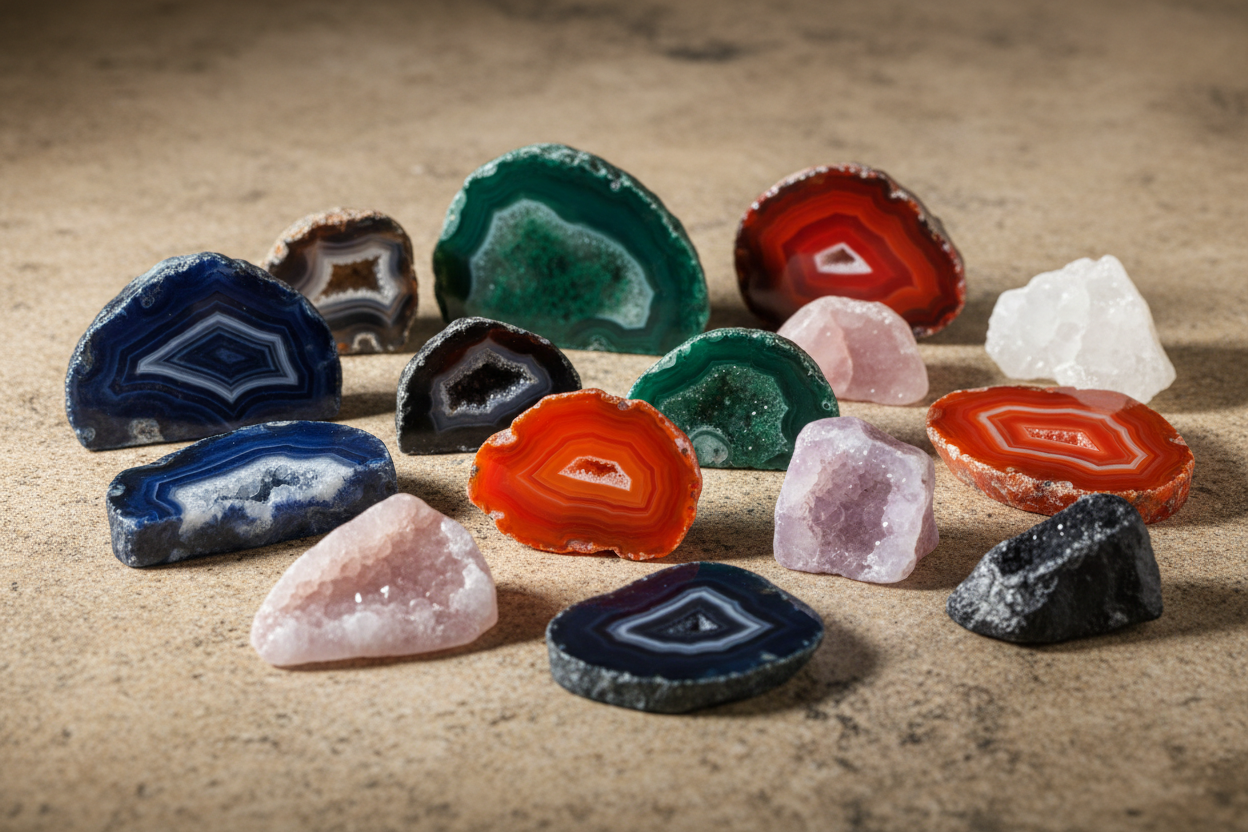
Agate Color Guide: Every Shade and What It Means for You
Walk into any crystal shop and you'll find agate in every color imaginable, each variety more striking than the last. But these colors aren't random, each shade forms through specific mineral combinations and carries distinct properties that have fascinated collectors for centuries. This guide explores what creates each agate shade, how to identify genuine specimens, and which colors might work best for your needs.
What Colors Does Agate Come In?
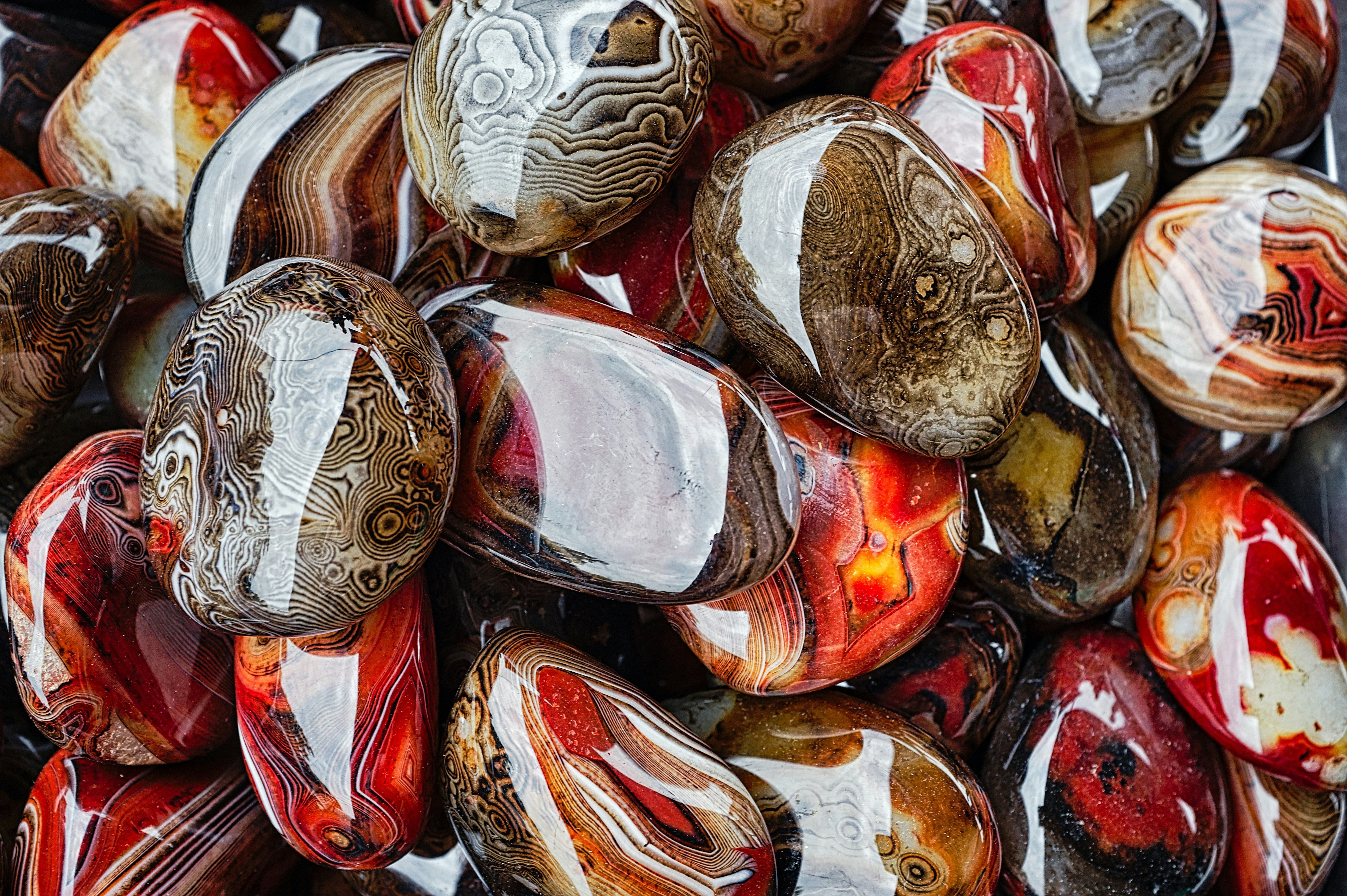
Agate appears in virtually every color from vibrant blues and greens to deep reds, purples, and blacks. Common shades include white, gray, brown, blue, green, red, pink, purple, orange, and black. Each color results from different minerals present during formation, iron creates reds and oranges, manganese produces pinks and purples, while chromium generates greens. Natural variations within specimens distinguish genuine pieces from uniformly dyed alternatives.
Understanding Agate Color Formation
Understanding why agate displays such incredible color diversity helps you recognize authentic specimens and appreciate their geological history.
What Causes Different Agate Colors?
Mineral inclusions create the colors we see in agate. Iron oxide produces red, orange, and yellow bands depending on oxidation state-ferric iron creates warm tones while ferrous iron produces cooler greens and blues. Manganese generates pink and purple hues, while chromium yields various green shades.
This process unfolds over millions of years as silica-rich water deposits successive layers inside volcanic rock cavities. Each layer potentially contains different mineral concentrations, creating the distinctive banding patterns. Understanding this formation helps distinguish natural color from artificial treatment when evaluating specimens.
Natural vs Dyed Agate Colors
The market includes both natural and dyed specimens. Natural color develops through geological processes, while dyed stones receive artificial treatment to enhance or create specific hues. Bright neon shades, perfectly uniform coloring throughout, and unnaturally intense colors typically indicate dyeing.
Natural specimens show color variations between bands-lighter and darker zones reflecting changing mineral concentrations. Dyed pieces often display color concentrated in cracks or porous areas where dye penetrates easily. While dyed agate remains genuine stone, natural coloring commands higher prices and may carry stronger properties for crystal work.

The Complete Agate Color Spectrum
From common earth tones to rare iridescent varieties, each shade tells a unique geological story and serves different purposes for collectors and crystal practitioners.
Blue Agate Colors
Most blue agate in shops has been dyed. Natural specimens show softer powder-blue tones rather than electric cobalt, with Blue Lace Agate from Namibia being the most recognized variety. Hold it to light and the characteristic lace banding becomes more visible. Pieces like Banded Blue Lace Agate Tumbles highlight these soft layered patterns especially well.

Collectors pay premium for genuine blue because it's genuinely uncommon. The shade connects to throat chakra work, which explains why people reach for it during difficult conversations or public speaking. The calming effect feels gentler than darker stones, making it accessible even for sensitive individuals.
Check color distribution when evaluating. Dyed stones show uniform color throughout, while natural specimens display subtle variations with gray or white areas where minerals differed.
Green Agate Colors
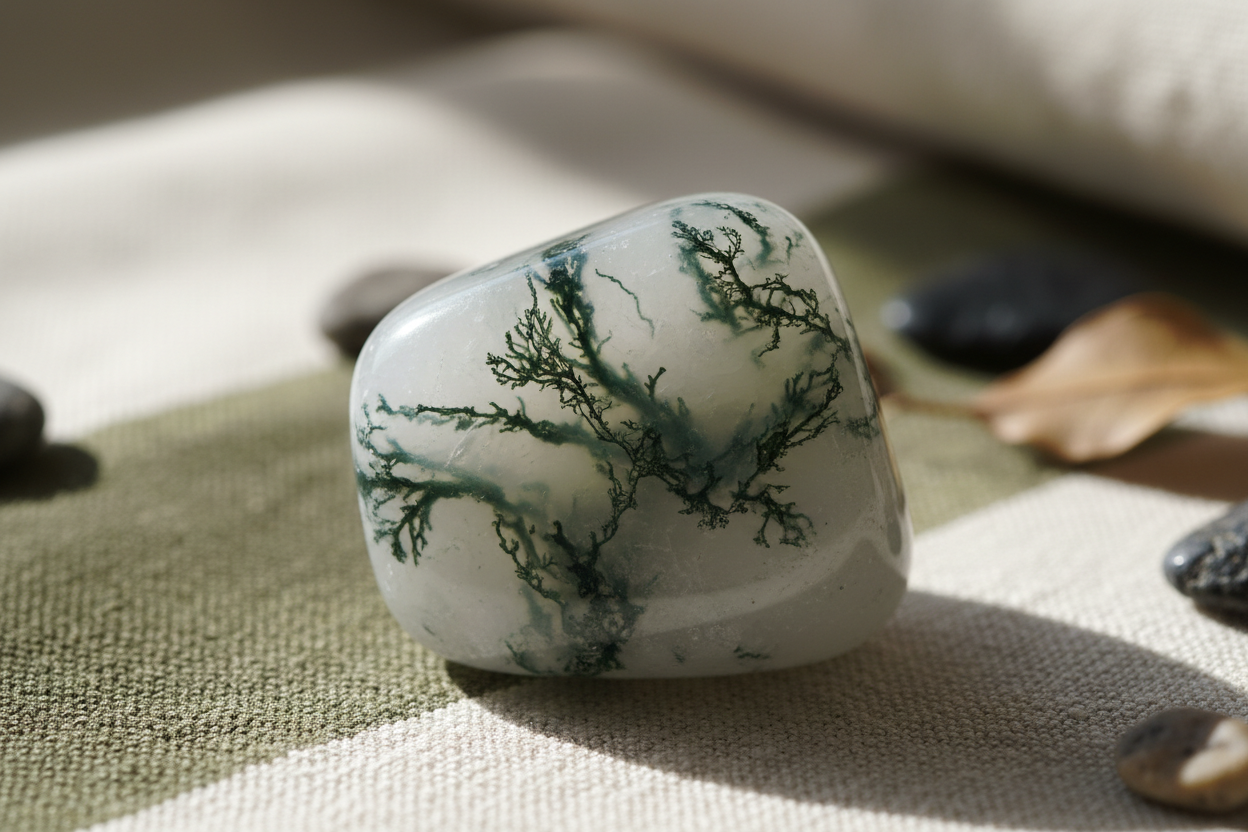
The "moss" in moss agate isn't actually moss, it's mineral inclusions, usually chlorite or iron hornblende, creating organic patterns in clear chalcedony. No two pieces look identical. Some show delicate fern-like wisps, while others display bold landscapes that collectors specifically seek out.
Green varieties range from pale mint through deep forest, with color intensity reflecting which minerals were present during formation. These specimens connect to heart chakra work and growth energy, making them popular with people navigating major life transitions or seeking courage for difficult decisions.
Dendritic agate offers another green option where manganese creates tree-like patterns. Montana produces particularly striking specimens with dark inclusions against cream backgrounds.

Red Agate Colors
Quality red specimens show color variation within the same stone, not the flat, uniform red of dyed material. Natural pieces range from pale pink-red through deep burgundy and brick tones, with intensity reflecting iron oxide concentrations. If every band shows identical saturation, you're probably looking at treated stone.
The vibrant tones connect to root chakra work and grounding practices. Many find red varieties helpful for strengthening willpower during challenging projects, though effects likely combine psychological comfort with energetic properties.
Fire agate deserves special mention, this variety shows genuine iridescence from iron oxide platelets layered within the structure. Rotate quality fire agate and watch reds shift to orange-gold, creating a living flame effect.
Purple Agate Colors
Hold quality purple agate to sunlight and you'll see why collectors pay premium prices. The best specimens show smoky lavender layers that seem to glow from within, created when manganese and iron combine during formation. Dyed versions look flat by comparison, color sits on the surface rather than emanating from depth.
Natural purple remains genuinely uncommon, explaining both its value and why the market overflows with dyed alternatives. The shade connects to third eye and crown chakra work, making these pieces popular for intuition practices. Darker shades carry more intense energy, while pale lavender offers gentler vibrations.
Examine banding closely when evaluating. Natural specimens show color variations between layers, sometimes fading into white or gray zones.
Pink, Orange, and Yellow Agate Colors
Pink varieties, particularly Botswana agate, show soft layers from pale blush through deeper rose, often combined with gray or white in watercolor-like banding. The gentle energy makes pink popular for emotional healing work and stress relief, connecting to heart chakra practices.
Orange specimens blend red and yellow characteristics, creating warm tones from peach through tangerine. This shade connects to sacral chakra work and carries activating energy, less intense than red but warmer than yellow. Natural orange requires specific iron oxide formations.
Yellow ranges from pale cream through golden honey. Natural specimens show subtle variations rather than bright, uniform yellow. Truly bright yellow usually indicates dyeing-genuine pieces lean toward mustard or amber tones.
Brown, Black, and White Agate Colors
Brown appears everywhere because it forms easily-tan, beige, chocolate, and coffee tones all result from iron compounds incorporated during crystallization. Don't let abundance diminish perceived value. These earthy specimens provide solid grounding energy, and accessibility means you can afford larger pieces for workspace placement.
Black ranges from true black through very dark gray. Black onyx, with straight alternating black and white bands, represents the most recognized variety. Deep tones connect to root chakra and protection work.
White and gray form the foundation from which other colors emerge. Most agate begins as white or gray chalcedony, with additional colors developing through mineral inclusions. These neutral tones work with all chakras without adding specific directional energy.

Agate Color Meanings and Properties
Each shade carries specific associations that help guide selection based on your intentions and needs, though personal resonance often matters more than traditional correspondences.
|
Agate Color |
Chakra |
Energy Type |
Best For |
Rarity |
|
Blue |
Throat |
Calming, communicative |
Anxiety relief, self-expression |
Uncommon |
|
Green |
Heart |
Growing, balancing |
Decision-making, abundance |
Common |
|
Red |
Root |
Grounding, energizing |
Confidence, vitality |
Common |
|
Purple |
Third Eye, Crown |
Spiritual, creative |
Intuition, imagination |
Uncommon |
|
Pink |
Heart |
Gentle, nurturing |
Emotional healing, self-love |
Moderate |
|
Orange |
Sacral |
Creative, passionate |
Motivation, joy |
Moderate |
|
Yellow |
Solar Plexus |
Optimistic, confident |
Mental clarity, success |
Moderate |
|
Brown |
Root |
Stable, practical |
Grounding, endurance |
Very Common |
|
Black |
Root |
Protective, absorbing |
Emotional strength, protection |
Common |
|
White/Gray |
All |
Neutral, amplifying |
Balance, purity |
Very Common |
This chart summarizes traditional associations for each shade. Warmer tones like red, orange, and yellow tend to energize and activate, while cooler shades including blue, green, and purple calm and balance. Neutral colors ground and protect without adding directional energy.
Ready to experience these colors in person? Browse our hand-selected agate crystal collection to find specimens in your preferred shade.
How to Choose the Right Agate Color for You
Selection depends on your specific needs and personal resonance more than rigid rules. Trust your intuition alongside these practical guidelines.
Choosing Agate Color by Intention
For emotional healing, pink and green work well for processing feelings and heart wounds. Blue helps when emotions affect communication or self-expression.
For grounding and stability, brown, black, and red provide the strongest anchoring effects during chaotic periods or major transitions.
For creativity and motivation, orange, yellow, and purple stimulate creative flow and activate imagination when you're feeling stuck or uninspired.
For protection, black offers the most powerful shielding, while red and brown also provide strong protective qualities during challenging circumstances.
For spiritual development, purple and white enhance awareness and support meditation or intuition practices without overwhelming sensitivity.
Choosing Agate Color by Chakra
Match shades to chakras needing balance. Root chakra responds to red, brown, and black. Sacral chakra benefits from oranges. Solar plexus healing uses yellow. Heart chakra opens with green and pink. Throat chakra clears with blue. The third eye awakens through purple, while crown chakra activates with white varieties.
This system provides a framework, but personal attraction often indicates what you need more accurately than intellectual matching. Your subconscious recognizes beneficial energies before conscious awareness catches up.
Trusting Your Intuition with Agate Color
Beyond logical selection, intuitive attraction to specific shades often reveals what you need energetically. Notice which colors draw your attention repeatedly or feel comfortable when held. Your inner guidance recognizes beneficial frequencies before intellectual analysis.
If drawn to a shade that seems counterintuitive to your stated intention, trust that attraction. Your wisdom knows what you need even when it differs from what you think you want. The "wrong" color might be exactly right.
For guidance on crystal selection beyond color, see our guide on choosing crystals for your specific needs.
How Agate Color Affects Value
Beyond rarity, value depends on intensity, clarity of banding, and overall visual appeal. Vibrant, saturated tones command higher prices than pale or muddy shades. Clear, well-defined banding adds value regardless of color.
Natural coloring always costs more than dyed equivalents when buyers can verify authenticity through examination or certification. Size influences value too, with larger specimens in rare shades fetching premium prices from serious collectors focused on investment-grade pieces.
Agate Color Combinations and Patterns
Many specimens display multiple shades in striking combinations, with pattern quality often mattering as much as color itself for serious collectors.
Banded Agate Color Patterns
Fortification agate shows concentric bands of alternating shades following cavity contours where the stone formed. These bands may include white, gray, brown, red, and orange in striking layered patterns that create visual depth.
The color distribution in banded patterns tells geological stories, with each layer representing different environmental conditions when that silica layer is deposited. Color bands range from hairline thin to several millimeters wide, with tighter banding generally considered more desirable by collectors.

Landscape and Iridescent Agate Colors
Some specimens display patterns resembling landscapes or horizons, with multiple shades arranged in ways that evoke natural scenes. These scenic varieties attract collectors specifically seeking artistic patterns rather than uniform coloring.
Certain varieties exhibit color-changing properties through iridescence. Iris agate displays rainbow effects when light hits at specific angles. Fire agate's colors shift as the stone rotates, creating dynamic visual effects that differ dramatically from static coloring in standard varieties.
To understand more about unique agate varieties, explore our comprehensive crystal meanings guide.
Caring for Different Agate Colors
While all agate requires similar basic care, certain shades need specific attention to maintain appearance and prevent fading over time.
General Agate Color Care
All varieties benefit from gentle cleaning with lukewarm water and mild soap. Avoid harsh chemicals, ultrasonic cleaners, and steam cleaning that might damage surface polish or affect color stability in treated specimens.
Store pieces separately from harder stones to prevent scratching. Keep out of prolonged direct sunlight, as UV exposure can fade certain shades over months or years of display in bright windows or outdoor settings.
Special Care for Specific Agate Colors
Light-colored specimens including white, pale blue, and pink show dirt more readily and may need more frequent cleaning. Dark varieties like black or deep red hide dust but benefit from regular polishing to maintain surface luster.
Dyed material requires extra care to prevent color bleeding. Avoid soaking dyed specimens and never expose them to harsh chemicals or prolonged water contact that might leach treatment.
Purple and blue prove most susceptible to UV fading. Store these varieties in drawers or boxes rather than sunny display areas if you want to preserve intensity long-term.
For complete crystal care instructions, see our detailed guide on how to cleanse crystals effectively.
Frequently Asked Questions About Agate Color
What is the rarest agate color? The rarest natural shades include vibrant reds from Laguna agate (depleted mine), fire agate's iridescent colors, and deep natural blues. Natural purple also ranks among rarest varieties due to specific mineral requirements during formation that occur infrequently.
Can agate change color over time? Natural color remains stable under normal conditions. However, prolonged UV exposure can fade lighter shades, particularly purples and blues. Dyed material may lose color if exposed to water, heat, or strong sunlight. Proper storage preserves specimens indefinitely.
How can I tell if my agate is dyed? Dyed specimens often display unnaturally bright or uniform coloring throughout. Check for color concentrated in cracks or porous areas where dye penetrates easily. Natural specimens show gradual variations and transitions rather than flat, even tones across all bands.
What agate color is best for beginners? Brown, green (moss), or white varieties provide gentle, accessible energy suitable for beginners. These common types offer affordable entry points while delivering genuine benefits. The best shade ultimately depends on personal attraction and intended use rather than universal rankings.
Do different agate colors have different hardness? No, all varieties share the same Mohs hardness of 6.5 to 7 regardless of color. Hardness comes from agate's microcrystalline quartz composition, which remains consistent across all color varieties and formation locations worldwide.
The Lasting Appeal of Agate Colors
Agate color diversity reflects millions of years of geological artistry, with each shade offering unique beauty and characteristics. Whether drawn to common brown's earthy stability or rare fire agate's iridescent display, every variety deserves appreciation for the natural processes that created it. Understanding what creates these colors, their traditional meanings, and proper care helps you select and maintain specimens that bring lasting enjoyment to your collection.