

Tree-Like Crystal Patterns: Nature's Art in Stone
What Are Dendritic Crystal Patterns?
Dendritic crystal patterns nature creates are among the most mesmerizing formations you'll encounter in the mineral world. These tree-like structures aren't actually crystals in the traditional sense, but rather mineral deposits that form intricate, branching patterns resembling delicate ferns or frost on winter windows.
The term "dendritic" comes from the Greek word "dendron," meaning tree. These formations occur when minerals precipitate from solutions in thin films or along fractures in host rocks. The resulting patterns mimic organic growth, creating stunning natural artwork that has captivated collectors and crystal enthusiasts for centuries.
The Science Behind the Beauty
When mineral-rich fluids encounter barriers or changes in pressure and temperature, they deposit materials in branching patterns. This process follows mathematical principles similar to those governing river deltas or lightning strikes. The dendrites typically consist of manganese oxide, iron oxide, or other metallic minerals that create dark, contrasting patterns against lighter host stones.
How Nature Creates These Masterpieces
The formation of dendritic patterns requires specific geological conditions. Picture groundwater seeping through rock layers, carrying dissolved minerals on its journey. As this mineral-laden water encounters fractures or porous surfaces, it begins to deposit its cargo in distinctive branching formations.
Temperature fluctuations play a crucial role in this process. Rapid cooling or changes in chemical composition cause minerals to crystallize quickly, creating the characteristic tree-like structures. Each dendritic formation is unique, influenced by factors such as:
- Fluid composition and concentration
- Rate of mineral precipitation
- Surface tension and viscosity
- Environmental pressure variations
The Role of Host Minerals
Dendritic patterns commonly appear in agate, opal, limestone, and sandstone. The host mineral's porosity and chemical composition determine how dendrites develop and what colors they display. Some specimens showcase silver-gray manganese dendrites, while others feature rusty iron oxide patterns that seem to dance across the stone's surface.
"In dendritic formations, we witness nature's ability to create art through pure chemistry and physics, resulting in specimens that blur the line between mineral and masterpiece."
Exploring Dendritic Opal: A Collector's Dream
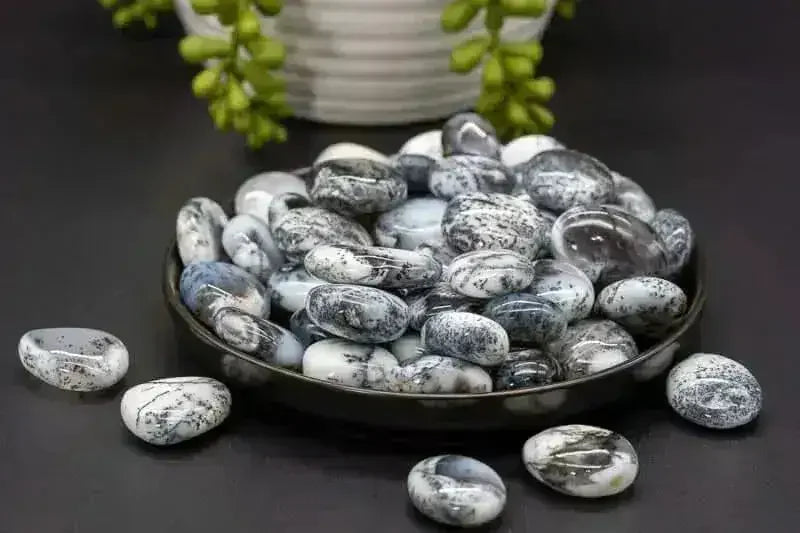
Among the most sought-after specimens featuring these natural patterns are dendritic opals. These remarkable stones combine opal's inherent beauty with intricate tree-like inclusions, creating pieces that seem to contain entire landscapes within their translucent depths.
For collectors seeking to add these natural artworks to their collection, dendritic opal tumbles offer an accessible way to appreciate these geological wonders. These polished specimens highlight the contrast between the opal's milky translucence and the dark, branching dendrites, making them perfect for meditation, display, or as conversation pieces that showcase nature's artistic capabilities.
The smooth, tumbled surface allows light to penetrate the stone, illuminating the dendritic patterns from within and creating an almost three-dimensional effect that changes as you rotate the specimen.
Types and Variations in Dendritic Formations
Dendritic crystal patterns nature produces vary significantly in appearance and composition. Understanding these variations helps collectors appreciate the diversity within this fascinating category of mineral specimens.
| Type | Mineral Composition | Typical Appearance |
|---|---|---|
| Manganese Dendrites | Manganese Oxide | Black to dark gray branching patterns |
| Iron Dendrites | Iron Oxide | Reddish-brown to rust-colored formations |
| Copper Dendrites | Native Copper | Metallic red-orange tree-like structures |
Pseudofossils and Misconceptions
Many people mistake dendritic formations for fossilized plant material. These "pseudofossils" can be incredibly convincing, especially when they appear in sedimentary rocks. However, their inorganic origin becomes apparent through careful examination of their structure and composition.
Caring for Your Dendritic Specimens
Proper care ensures these natural artworks maintain their beauty for generations. Most dendritic specimens are relatively durable, but they benefit from gentle handling and appropriate storage conditions.
Clean your specimens with soft brushes and mild soap when necessary. Avoid harsh chemicals that might affect the host mineral or alter the dendritic patterns. Store them away from direct sunlight if they contain light-sensitive minerals, and consider displaying them where their intricate patterns can be fully appreciated.
Whether you're drawn to their scientific significance or their aesthetic appeal, dendritic crystal patterns represent one of nature's most elegant expressions of order emerging from chaos, making them invaluable additions to any crystal collection.