Article: Agate Meaning: Symbolism, Spiritual Significance, Types, and Uses Explained
Agate Meaning: Symbolism, Spiritual Significance, Types, and Uses Explained
Agate has remained one of the world's most popular gemstones for centuries, yet many people are still curious about its deeper symbolism and significance. Whether discovered in crystal collections, jewelry stores, or spiritual wellness communities, agate continues to attract attention because of its distinctive patterns, natural beauty, and long history of cultural meaning.
In short, agate meaning refers to balance, protection, grounding, emotional stability, and inner strength. Throughout history, people have valued agate as a stone that promotes resilience during life's challenges while encouraging harmony between emotions, thoughts, and personal growth. Today, agate remains popular among collectors, crystal enthusiasts, and anyone drawn to gemstones with both visual appeal and symbolic significance.
What Is Agate? Formation, Structure, and Why It Looks the Way It Does
To understand agate meaning, it helps to first understand what agate actually is. Many of the symbolic interpretations associated with this stone stem directly from the way it forms in nature and the unique characteristics that distinguish it from other gemstones.

How Agate Forms Inside Volcanic Rock Over Millions of Years
Agate is a variety of chalcedony, which itself belongs to the quartz family. Most agates form inside cavities created by volcanic activity, where mineral-rich groundwater slowly deposits microscopic layers of silica over thousands or even millions of years.
As these layers accumulate, they create the beautiful bands and patterns that make each agate unique. Because agate develops gradually over such immense periods of time, many people associate the stone with patience, steady growth, endurance, and the ability to evolve through life's challenges rather than seeking immediate results.
This connection between slow natural formation and personal development is one reason agate has become a powerful symbol of resilience across different cultures and traditions.
What Makes Agate Different From Other Chalcedony Stones
Although agate belongs to the chalcedony family, it differs from several other popular stones that people often confuse with it. The most distinguishing characteristic is its visible layering or banding structure, which creates intricate patterns rarely found in other varieties.
|
Stone |
Key Characteristics |
Appearance |
Symbolic Association |
Best Used For |
|
Agate |
Banded chalcedony |
Layered patterns and color variations |
Balance, protection, grounding |
Emotional stability and daily grounding |
|
Jasper |
Opaque chalcedony |
Solid colors and scenic patterns |
Nurturing, endurance |
Strength and long-term support |
|
Quartz |
Crystalline silica |
Transparent or translucent crystals |
Clarity and amplification |
Energy work and manifestation |
|
Onyx |
Parallel-banded chalcedony |
Usually black and white layers |
Protection and discipline |
Personal boundaries and focus |
While all four stones belong to related mineral groups, agate occupies a unique position because it combines visual complexity with symbolism centered around balance and emotional harmony.
Colors and Visual Variations Explained
One of the reasons agate remains so popular is its incredible diversity. No two specimens look exactly alike, and the stone can appear in almost every color imaginable.
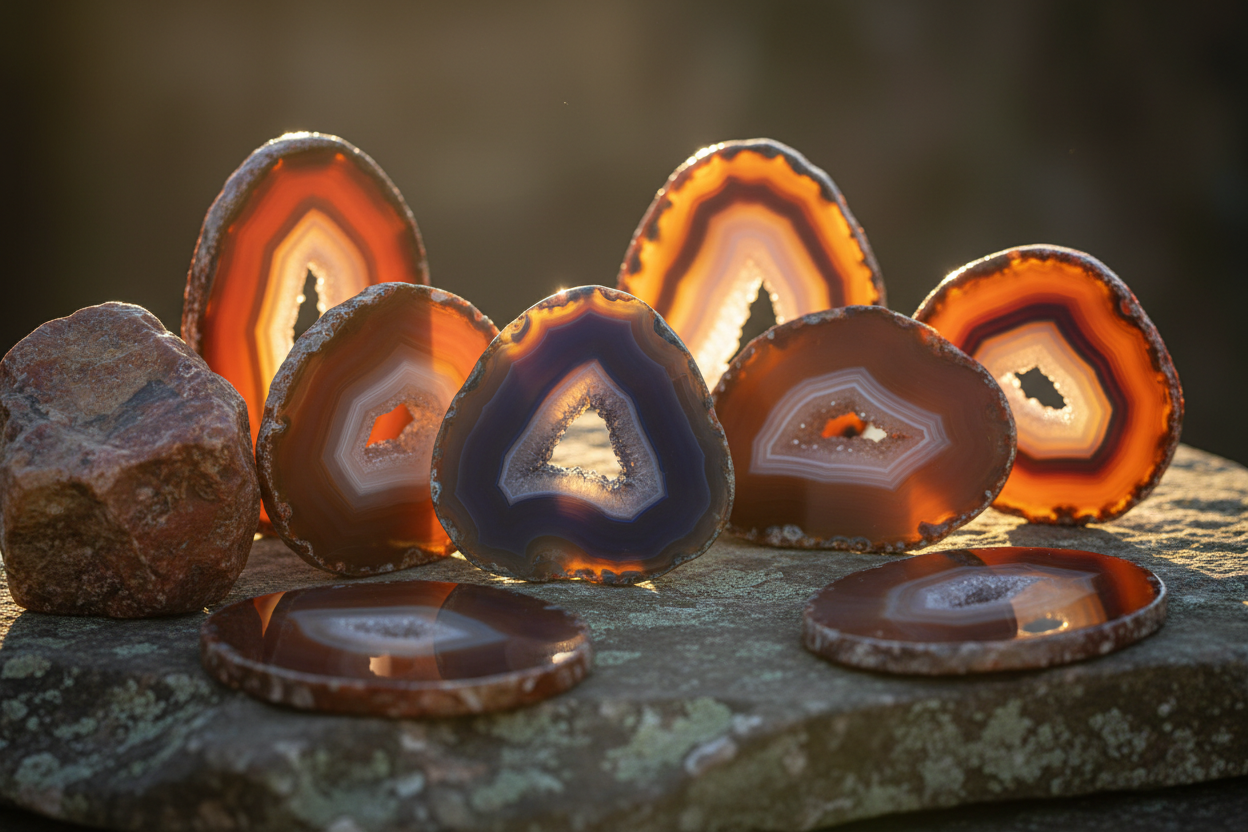
Natural agates often display earthy browns, soft grays, creamy whites, greens, blues, and warm orange tones. Many specimens are partially translucent, allowing light to pass through certain layers while revealing intricate internal structures.
The famous banding patterns form as different mineral deposits settle over time. These bands can appear delicate and subtle or dramatic and highly contrasted, creating visual landscapes that resemble rivers, forests, clouds, or flowing water. This natural complexity contributes significantly to the symbolic meanings people associate with agate today.
Learn more: Tree-Like Crystal Patterns: Nature's Art in Stone

Agate Meaning: Core Symbolism and What This Stone Represents
Now that we understand how agate forms, we can explore why this gemstone has accumulated such rich symbolic meaning throughout history.
The Core Agate Meaning: Balance, Protection, Grounding, and Inner Strength
At its core, agate meaning revolves around stability and balance. Unlike crystals often associated with intense transformation or high energy, agate is traditionally viewed as a steady, supportive stone that helps create equilibrium during periods of uncertainty.
The agate crystal meaning is frequently linked to emotional grounding, personal strength, and protection from negative influences. Many crystal practitioners describe agate as a stone that encourages practical thinking while helping individuals remain centered when facing challenges.
Rather than promoting rapid change, agate symbolizes gradual progress and sustainable growth. This makes it especially appealing to people seeking consistency and stability in their personal development journeys.
Why Agate's Banded Layers Became a Symbol of Emotional Resilience
The layered appearance of agate plays an important role in its symbolism. Each band represents a different stage in the stone's formation, creating a visual reminder that growth often occurs through multiple experiences accumulated over time.
Many people interpret these layers as a metaphor for emotional resilience. Just as agate develops strength through countless mineral deposits, individuals build character through life's successes, setbacks, and lessons.
Because of this symbolism, agate is often viewed as a stone that encourages perseverance. It reminds people that meaningful growth rarely happens overnight and that strength is often built gradually through experience.
Ancient Agate Meaning: Babylon, Egypt, Greece, and Medieval Europe
The symbolic significance of agate stretches back thousands of years. Ancient civilizations across multiple continents incorporated the stone into jewelry, ceremonial objects, and protective talismans.
In Babylonian culture, agate was frequently carved into amulets believed to offer protection from misfortune and harmful influences. Ancient Egyptians used agate in decorative ornaments and personal adornments, associating it with protection, prosperity, and spiritual strength.
Greek traditions connected agate with courage and battlefield success. Warriors sometimes carried agate charms as symbols of confidence and resilience. During the medieval period in Europe, agate remained popular as a protective stone believed to promote strength, wisdom, and good fortune.
Although interpretations varied among cultures, a consistent theme emerged: agate was viewed as a stabilizing force that offered protection and support during uncertain times.
Learn more: Crystal Meanings: Ancient Wisdom for Modern Living

Modern Agate Stone Meaning for Today's Collectors and Wellness Practitioners
In contemporary crystal culture, agate stone meaning has evolved while retaining many traditional themes. Modern collectors often appreciate agate for both its geological uniqueness and symbolic associations.
Wellness practitioners frequently view agate as a stone that promotes emotional balance, mindfulness, and self-reflection. Meanwhile, collectors value its endless variety of colors, patterns, and formations, making every specimen feel highly personal.
The enduring popularity of agate demonstrates how effectively it bridges science, art, history, and symbolism in a single gemstone.
Agate Spiritual Meaning and Energy Properties
Beyond its historical symbolism, agate has become widely recognized within spiritual communities for its calming and grounding associations.
Agate Spiritual Meaning: Grounding, Calm, and Energetic Balance
Agate spiritual meaning is most commonly associated with grounding energy. Many practitioners believe the stone encourages a stronger connection to the present moment while reducing feelings of emotional overwhelm.
Unlike crystals linked to intense transformation, agate is often described as gentle and stabilizing. Its energy is believed to support balance between emotional, mental, and physical aspects of life, helping individuals feel more centered during stressful periods.
This reputation as a grounding stone explains why agate remains a popular choice for beginners exploring crystal work and mindfulness practices.
How Agate's Energy Differs From High-Vibration Crystals Like Amethyst
One of the most useful ways to understand agate is by comparing it with crystals such as amethyst.
Amethyst is frequently associated with spiritual awareness, intuition, and higher consciousness. Many practitioners view it as an activating stone that encourages insight and transformation. Agate, by contrast, is typically positioned as a calming anchor.
Rather than elevating awareness toward higher states, agate is believed to strengthen connection with the present moment. While amethyst often symbolizes expansion, agate symbolizes stability. This distinction makes the two stones complementary rather than competitive within many crystal collections.
Agate in Meditation and Intention-Setting Rituals
Many people incorporate agate into meditation and mindfulness practices because of its grounding symbolism. During meditation sessions, practitioners may hold an agate stone or place it nearby to create a sense of stability and focus.
Agate is also commonly used during journaling exercises and intention-setting rituals. Some individuals keep agate on their desk while reflecting on goals, believing the stone serves as a reminder to pursue progress steadily and patiently.
In crystal grid practices, agate is often positioned as a stabilizing element that helps support broader intentions related to balance, protection, and personal growth.
It is important to note that spiritual interpretations of agate are symbolic and personal. They are based on cultural traditions, individual beliefs, and metaphysical practices rather than established scientific evidence, and they should not be viewed as medical or psychological treatment.
See more: Green Stone Tumbled Crystals: Your Guide to Natural Beauty

Types of Agate and Their Meanings: Complete Visual Guide
Agate has been admired for centuries because no two stones ever look exactly alike. Different colors, patterns, and mineral inclusions have led cultures around the world to associate each variety with its own emotional symbolism and spiritual meaning. From grounding black agate to nurturing flower agate, every type offers a distinct energy connection that appeals to collectors, jewelry lovers, and crystal enthusiasts alike.
Moss Agate Meaning
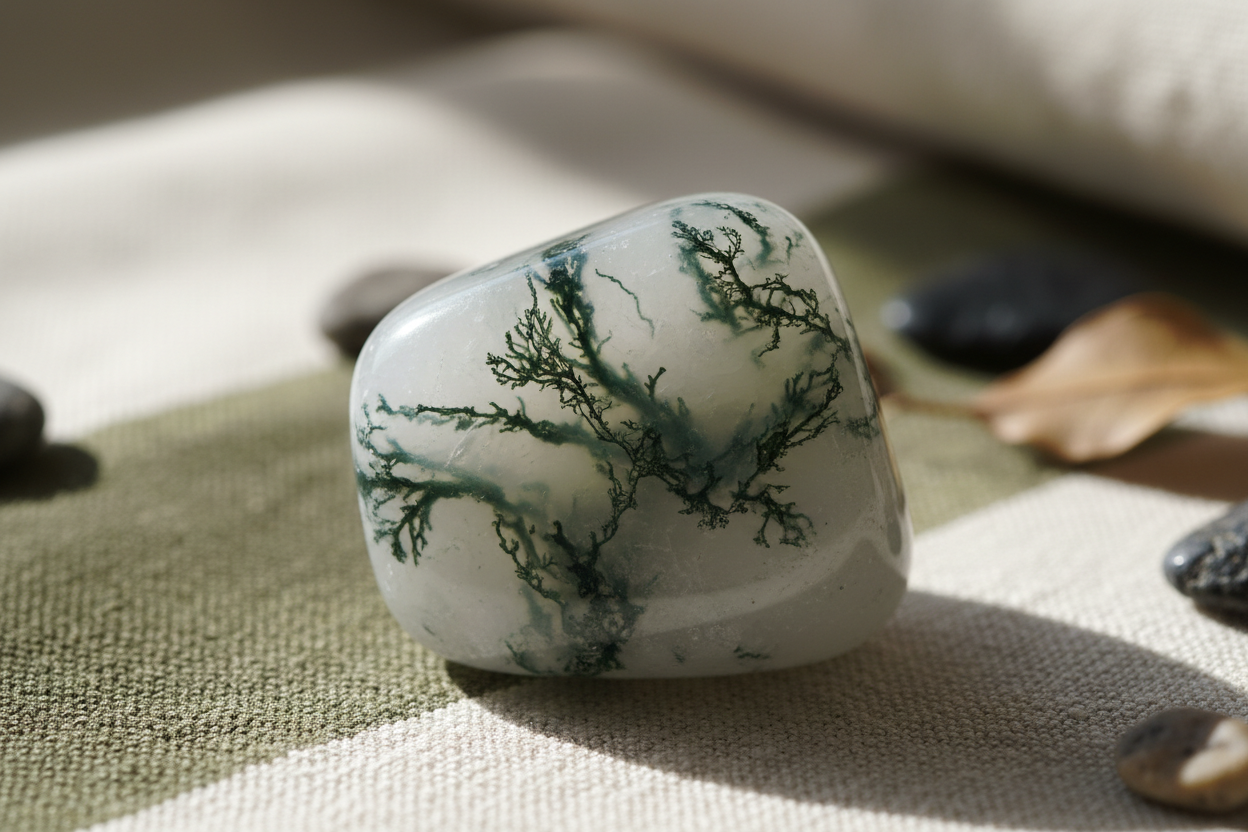
Moss Agate is strongly associated with growth, renewal, and a deeper connection to nature. Its green, moss-like inclusions symbolize abundance and personal transformation, making it a popular stone for those starting new chapters in life or seeking emotional balance. Many crystal practitioners also view Moss Agate as a calming stone that encourages patience and steady progress.
Blue Lace Agate Meaning
Blue Lace Agate is known for its soft blue banding and calming energy. It is commonly linked to peaceful communication, emotional clarity, and stress relief, which is why many people use it during difficult conversations or periods of anxiety. Its soothing appearance reinforces its symbolism of tranquility and emotional openness.
Fire Agate Meaning
Fire Agate is associated with courage, vitality, and creative energy. Its warm flashes of red, orange, and gold are often connected to motivation, confidence, and inner strength. Many believe this stone helps inspire action while providing protective energy during times of uncertainty or change.
Black Agate Meaning
Black Agate symbolizes protection, grounding, and resilience. Because of its deep, dark appearance, it is often used as a stabilizing stone that helps absorb negativity and promote emotional strength. Many people choose Black Agate jewelry when they want a sense of security, focus, and balance during stressful situations.
Flower Agate Meaning
Flower Agate is closely tied to emotional growth, self-discovery, and heart-centered healing. Its soft floral inclusions symbolize blooming potential and personal transformation, while many crystal enthusiasts also connect it to both the heart chakra and root chakra for emotional stability and inner confidence. The stone’s gentle appearance has made it especially popular for meditation and intentional self-growth practices.
Dendritic Agate, Botswana Agate, and Pink Agate
Dendritic Agate is often associated with abundance, wisdom, and a strong connection to the natural world because of its tree-like mineral formations. Botswana Agate is widely valued for comfort and emotional support, particularly during periods of grief, stress, or major life transitions. Pink Agate, with its soft pastel tones, is commonly linked to compassion, self-love, and emotional healing, making it popular in calming jewelry and decorative pieces.
|
Agate Type |
Common Meaning |
|
Moss Agate |
Growth, renewal, abundance |
|
Blue Lace Agate |
Calm communication, clarity |
|
Fire Agate |
Courage, vitality, creativity |
|
Black Agate |
Protection, grounding |
|
Flower Agate |
Emotional growth, transformation |
|
Dendritic Agate |
Wisdom, connection to nature |
|
Botswana Agate |
Comfort, emotional balance |
|
Pink Agate |
Love, compassion, healing |
See more: Green Stone Tumbled Crystals: Your Guide to Natural Beauty

Agate Healing Properties and Emotional Benefits
Agate has long been associated with emotional balance, inner stability, and calming energy. While beliefs surrounding crystal healing vary between cultures and spiritual traditions, agate remains one of the most widely used stones for grounding practices and emotional support.
Emotional Grounding and Stress Reduction Symbolism
Many people use agate as a symbolic grounding stone because of its layered structure and stable appearance. Crystal practitioners often believe agate promotes emotional steadiness during stressful situations, helping individuals feel calmer, more centered, and emotionally protected. Stones like Black Agate and Botswana Agate are especially popular for stress-reduction rituals and mindfulness routines.
Mental Clarity and Focus Associations
Agate is also frequently associated with mental clarity and concentration. Some believe the stone encourages logical thinking, emotional awareness, and balanced decision-making, making it useful during meditation, journaling, or creative work. Blue Lace Agate, in particular, is often connected to clear communication and thoughtful self-expression.
Historical Physical Healing Beliefs
Historically, agate appeared in many ancient cultures as a protective and healing talisman. Traditional beliefs linked agate to fertility, vitality, courage, and physical protection during travel or battle. Although these interpretations are rooted in folklore and spiritual traditions rather than scientific evidence, they continue to influence modern crystal symbolism and wellness practices today.
Agate and other crystals should be viewed as complementary wellness tools rather than replacements for professional medical advice, diagnosis, or treatment.

How to Use Agate: Jewelry, Meditation, Home Decor, Collecting
Agate is valued not only for its symbolism but also for its versatility. From wearable jewelry to collector-grade display pieces, agate can be incorporated into everyday life in both decorative and personal ways.
Agate Jewelry – Rings, Pendants, and Statement Pieces
Agate is widely used in jewelry because of its durability, color variety, and striking natural patterns. Rings, pendants, bracelets, and statement necklaces often feature polished agate slices or cabochons that highlight the stone’s layered banding. Many people choose specific agate colors based on symbolic meaning, while others simply appreciate the stone’s unique visual appeal.
Agate for Meditation and Grounding Practices
Crystal enthusiasts frequently use agate during meditation or grounding rituals because of its calming symbolism. Holding an agate palm stone or placing one nearby during mindfulness exercises may help create a more focused and peaceful environment. Moss Agate, Flower Agate, and Black Agate are especially popular for grounding and emotional reflection practices.
Home Decor – Agate Slices, Bookends, and Décor Trays
Agate has become increasingly popular in interior décor because of its natural color variations and translucent beauty. Polished agate slices are often displayed on stands or incorporated into trays, coasters, wall art, and decorative bookends. Larger statement pieces can add texture and organic elegance to modern, bohemian, or luxury-inspired spaces.
Agate for Collectors – What Makes a Piece High-Value
Collectors often evaluate agate based on pattern density, translucency, color contrast, and banding symmetry. Stones with highly defined bands, rare color combinations, or unusual natural formations are generally considered more desirable. Collector-grade agates may also feature exceptional polish quality, strong translucency under light, or distinctive inclusions that make each specimen visually unique.
How to Cleanse and Care for Agate
Agate is relatively durable compared to many other gemstones, but proper care still helps preserve its polish and natural beauty over time. Clean agate using lukewarm water, mild soap, and a soft cloth, while avoiding harsh chemicals or abrasive cleaners that could dull the surface.
Many crystal enthusiasts also choose to energetically cleanse agate through methods such as moonlight exposure, smoke cleansing, or placing the stone on a selenite charging plate. To prevent scratches, store agate jewelry separately from harder gemstones and avoid prolonged exposure to direct sunlight, which may gradually fade certain dyed varieties.
See more: How to Cleanse Crystals: Complete Beginner’s Guide
Frequently Asked Questions
What chakra is agate commonly associated with?
Different agate colors are often linked to different chakra traditions. Black agate is commonly associated with the root chakra and grounding energy, green agate with the heart chakra and emotional balance, and blue lace agate with the throat chakra and communication symbolism.
How is agate commonly used?
Agate is widely used in jewelry, meditation practices, crystal grids, wellness spaces, and interior décor. Its durability and natural patterns also make it popular for rings, pendants, decorative slices, bookends, and creative workspace décor.
Who is most commonly drawn to agate stones?
Agate appeals to beginner crystal collectors, meditation practitioners, jewelry enthusiasts, and people interested in emotional grounding or nature-inspired aesthetics. Many people also choose agate during stressful life transitions, burnout, or personal reflection periods.
How can you identify real agate?
Authentic agate usually displays natural banding, slight translucency, organic imperfections, and layered mineral formations created over geological time. Extremely bright colors, perfectly repetitive patterns, or plastic-like textures may indicate dyed or synthetic imitations.