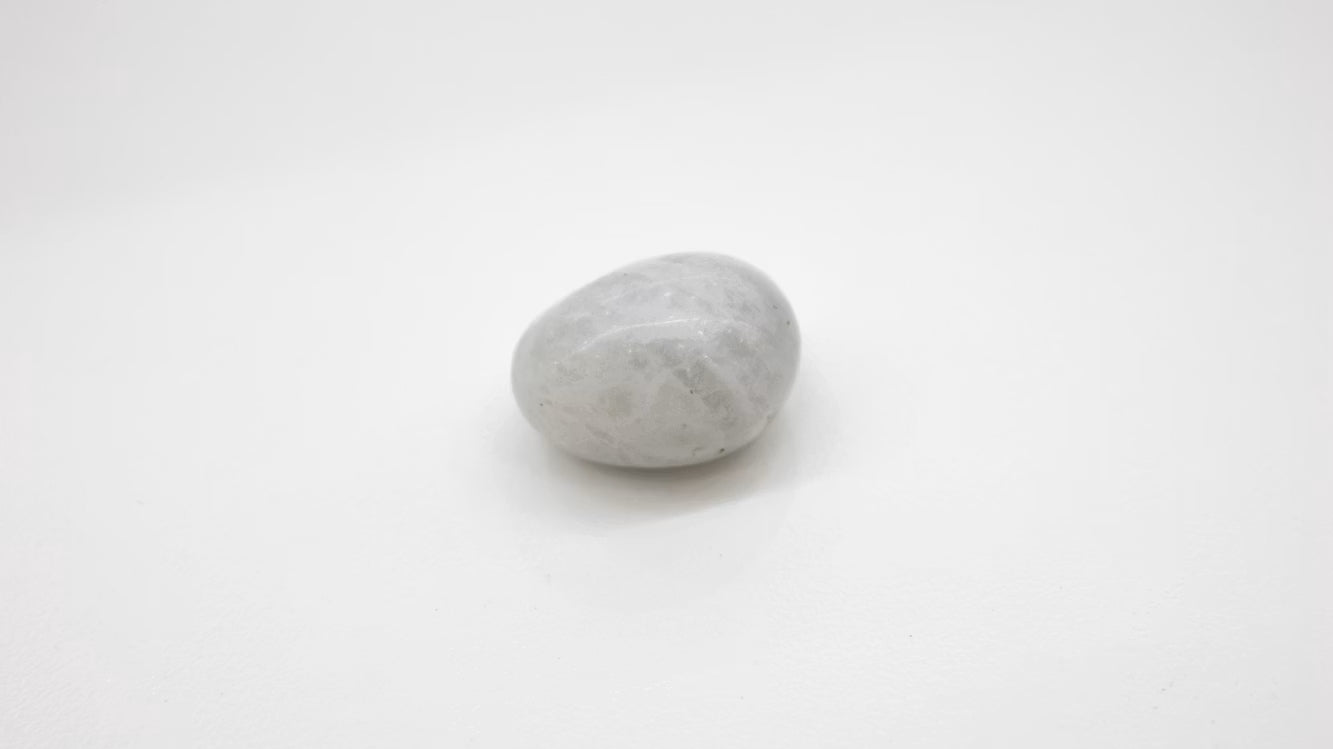
Moonstone Meaning: Healing Properties, Spiritual Significance & How to Use It
Moonstone has been treasured for centuries as one of the most spiritually significant gemstones in the world. Whether you are drawn to its soft glow, its deep roots in ancient tradition, or its reputation as a stone of new beginnings, this guide from My Crystal Addiction explores everything: the science behind its glow, what moonstone meaning has represented across history, its healing properties, and how to choose the right variety for your needs.
What Is Moonstone and Why Does It Glow?
Moonstone belongs to the feldspar mineral group, but its identity comes entirely from one optical property: the way it handles light.
The Science Behind Adularescence
The floating glow inside moonstone is called adularescence, the optical effect that gives the stone its unmistakable lunar appearance. It occurs because moonstone forms from two feldspar minerals, orthoclase and albite, which separate into microscopic layers as the crystal cools. When light enters the stone, it scatters between these layers and creates a soft, billowing glow that appears to drift beneath the surface as the stone moves.
The quality of that glow plays a major role in determining value. Stones with exceptionally fine and uniform internal layers can produce a rare blue flash, while others display a white or silvery sheen. In general, the stronger and more centered the flash appears, the more desirable the stone is to collectors and jewelry makers.
Rainbow Moonstone: Is It Really Moonstone?
One surprising fact is that rainbow moonstone is not technically moonstone. Gemologically, it is a variety of white labradorite, another member of the feldspar family. Its colorful flash comes from a different optical phenomenon called labradorescence, rather than adularescence.
Despite this distinction, the name “rainbow moonstone” remains widely used throughout the crystal and jewelry world. Many practitioners work with it alongside traditional moonstone because both stones share strong associations with intuition, protection, and spiritual growth.

Moonstone vs. Labradorite: Which One Is Right for You?
Both stones display an inner play of light, both belong to the feldspar family, and both are associated with intuition. The energy they carry, however, is genuinely different. Moonstone glows softly and is associated with receptivity, emotional cycles, and the divine feminine. Labradorite flashes boldly and is associated with transformation, psychic protection, and energetic shielding. In practical terms: reach for moonstone when you want to open and receive. Reach for labradorite stone when you want to protect and transform.
Moonstone |
Labradorite |
|
Light effect |
Soft floating glow (adularescence) |
Bold directional flash (labradorescence) |
Body color |
White, gray, peach, pink |
Dark gray-green with colored flash |
Primary energy |
Receptive, lunar, feminine |
Protective, transformative, psychic |
Chakra |
Crown, Third Eye |
Third Eye, Throat |
Emotional healing |
✓ |
|
Protection |
✓ |
|
Best for beginners |
✓ |
|
Shadow work |
✓ |
While its glow can be explained scientifically, the symbolism surrounding moonstone is what has fascinated people for thousands of years.
Moonstone Meaning: What This Crystal Symbolizes
Few gemstones carry a meaning that has stayed this consistent across so many cultures and centuries.
Ancient Associations
In ancient Rome, Pliny the Elder wrote that moonstone was formed from solidified moonlight, a divine origin that tied it directly to lunar goddesses of love and protection. Romans gave moonstone between lovers as a token of lasting connection, believing it amplified feeling and sustained passion through the natural cycles of the moon.
In Hindu tradition, moonstone was considered sacred and displayed on yellow cloth during religious ceremonies as an offering to lunar deities. Across Asia and the Middle East, travelers carried it for protection during night journeys, which is how moonstone earned the title of the Traveler’s Stone, a name still in use today.

What Moonstone Meaning Looks Like in Modern Practice
Moonstone is the stone of the divine feminine, representing receptivity, emotional wisdom, and the power of working with natural cycles rather than forcing outcomes. In contemporary crystal work, three themes appear consistently: new beginnings, intuition, and emotional balance.
Many people use moonstone intentionally within lunar rituals, setting intentions at the new moon and releasing what no longer serves them at the full moon. The idea is that moonstone does not push you toward an outcome. It attunes you to the rhythm of change already in motion, which is a subtler but often more sustainable kind of support than a stone that simply amplifies energy.
Moonstone Spiritual Meaning and Chakra Connection
Moonstone is most often associated with two energy centers: the Third Eye and the Crown. The reason these two chakras specifically, and not others, comes down to what moonstone meaning has always centered on.
The Third Eye governs perception beyond the surface: intuition, inner knowing, dream recall, and the ability to sense what lies beneath appearances. Moonstone’s receptive, inward quality aligns with this naturally. Placing moonstone at the brow during meditation is said to quiet overthinking and allow clearer access to instinctive wisdom. Those who work with dream journaling often keep a piece on the bedside table, since the Third Eye also governs the subconscious landscape navigated during sleep.

The Crown chakra represents connection to something larger than the self: higher consciousness, universal energy, and spiritual perspective. While the Third Eye looks inward, the Crown looks upward. Moonstone bridges both because lunar energy is understood in metaphysical tradition as simultaneously an inner compass and a cosmic mirror. The stone’s soft white luminosity aligns naturally with the Crown’s frequency, and working with it here is said to bring expanded awareness alongside a quieter mind.
Most people describe the combined experience as feeling both deeply calm and unusually clear about what to do next. The practical application in either case is simple: hold the stone, set an intention, and stay still long enough to notice what arises.
Moonstone Healing Properties
Moonstone is traditionally believed to support emotional, spiritual, and physical well-being in a gentle, balanced way.
Emotional Healing
One of the most widely recognized aspects of moonstone meaning is its connection to emotional regulation. At the core of its work in this area is a simple idea: feelings move in cycles, like tides, and resisting them tends to create more suffering than riding them does. Moonstone is said to soften that resistance without bypassing the feeling itself. It is turned to most often during grief, anxiety, hormonal shifts, and the emotional weight of major life changes. Wearing moonstone near the heart, as a necklace or pendant, is the most common practice for sustained support. For people who tend to suppress rather than process, pairing moonstone withrose quartz is a frequently recommended combination: moonstone maintains steadiness through the cycle while rose quartz opens the heart enough to let the feeling move.

Similar themes of emotional grounding run through other stones used during periods of change. Moss agate, for instance, is associated with stability and slow growth, and is often used alongside moonstone for people navigating long transitions rather than acute moments.
Spiritual Healing
On the spiritual level, moonstone is associated most strongly with intuition development and self-discovery. Many practitioners describe it as a stone that surfaces what has been overlooked: the patterns, unmet needs, and inner gifts that tend to stay below the threshold of everyday awareness. Meditation with moonstone is said to shorten the distance between what you consciously think and what you already know. Just as individual stones build layered meanings over centuries of use, understanding that process deepens how you work with them.
Physical Associations
Traditional crystal practice links moonstone to the physical areas most connected to feminine cycles, particularly fertility, hormonal balance, and PMS relief. It is also associated with improved sleep quality when placed near the bed at night.
Moonstone Crystal Meaning by Variety
Not every moonstone carries identical energy. Color, origin, and internal structure all influence how practitioners work with each type.
Variety |
Appearance |
Meaning & Use |
White Moonstone |
Milky, soft white glow |
New beginnings and clarity. The classic choice for new moon work and setting fresh intentions. |
Rainbow Moonstone |
Blue-white flash (white labradorite) |
Protection and intuition. The most widely available variety and a natural entry point for beginners. |
Peach Moonstone |
Warm peach tones |
Emotional healing and self-compassion. Often chosen during grief, heartbreak, or emotional recovery. |
Gray Moonstone |
Subtle silver shimmer |
Inner truth and shadow work. Sometimes called the New Moon Stone, used for endings and honest self-reflection. |
Black Moonstone |
Dark base, silver-blue flash |
Grounding and new moon power. Popular for new moon rituals and working with what is hidden or unresolved. |
Rainbow moonstone is the most widely sold variety for everyday wear. Peach moonstone tends to resonate with those in the middle of emotional processing. If you are new to moonstone and unsure where to start, white or rainbow are the most forgiving entry points. Browse our moonstone collection to compare varieties.
How to Cleanse and Charge Your Moonstone
Regular cleansing matters, especially after emotionally intense periods or sustained daily use.
Method |
Duration |
Notes |
Moonlight |
4–6 hours overnight |
The most fitting method: lunar energy recharging a lunar stone |
Selenite plate |
12–24 hours |
Reliable everyday alternative, no conditions required |
Sage or Palo Santo |
1–2 minutes |
Pass slowly through smoke after heavy use |
Running water |
30–60 seconds |
Brief rinse only; avoid prolonged soaking due to cleavage |
Placing moonstone on a windowsill on the night of the full moon is the most traditional approach, and for good reason: the method mirrors the stone’s own associations perfectly and costs nothing. Selenite crystal works just as well on any other night of the month and is worth keeping close if you use moonstone regularly.
Best Crystals to Pair With Moonstone
Moonstone and Labradorite work together for intuition and spiritual protection. The pairing is effective because the two stones occupy complementary positions: moonstone opens the intuitive field while labradorite shields it. For anyone who finds moonstone’s receptive energy leaves them feeling ungrounded or energetically exposed, adding labradorite provides the boundary the combination needs. Particularly effective for dream work and major life transitions.

Moonstone and Selenite form one of the most naturally harmonious pairings in crystal practice, and the reason is partly etymological: selenite takes its name from Selene, the Greek goddess of the moon, making both stones lunar by association. Practically, selenite continuously clears moonstone of accumulated energy while amplifying its natural frequency. The result is a combination that stays active longer between cleansing sessions, making it ideal for bedside placement or a meditation space you return to daily.
Moonstone and Lepidolite are a deeply calming pairing for emotional processing. Where moonstone works with the rhythm of change, lepidolite crystal reduces the nervous system’s resistance to it. Lepidolite contains lithium within its mineral structure, which crystal practitioners believe contributes to its genuinely calming quality. For grief, anxiety, or the harder phases of personal transition, this pairing addresses both the emotional cycle and the physical tension that tends to accompany it.
Moonstone Meaning: Frequently Asked Questions
Here are some common questions about moonstone meaning and how it is understood in everyday practice.
What does moonstone symbolize in relationships?
Empathy, attunement, and honest communication. Moonstone is associated with understanding a partner’s emotional patterns rather than reacting to them, and it carries a long traditional association with deepening intimacy through difficult cycles.
What does moonstone mean as a stone of new beginnings?
Just as each new moon marks a fresh start in the lunar cycle, moonstone is said to support the courage to step into something new, release what has ended, and trust the process of starting over. It does not push you forward. It reminds you that change is natural and that the cycle turns regardless.
Can men use moonstone?
Yes. The divine feminine energy associated with moonstone is present in every person regardless of gender. For men, working with it tends to surface emotional intelligence, reduce reactivity, and strengthen access to intuition, all qualities that belong to no single gender.
Which moonstone variety is best for beginners?
White or rainbow moonstone. Both are broadly applicable, energetically clear, and easy to find in quality cuts. Either makes a practical starting point before you explore varieties with more specific associations.
How do I know if my moonstone is real?
A genuine piece shows an adularescent glow that shifts as you rotate it under light. A static, uniform shimmer that does not move with the stone usually indicates glass or synthetic opalite. Weight is also a useful indicator: glass tends to feel lighter than genuine feldspar of the same size.
Is moonstone safe to put in water?
Brief rinsing is fine. Extended soaking is not. Moonstone has two perfect cleavage directions, meaning prolonged water exposure can weaken the stone’s structure over time. Moonlight or selenite charging is the safer default for regular cleansing.
What zodiac signs benefit most from moonstone?
Cancer most directly, as its planetary ruler is the moon. Scorpio and Pisces share strong resonance as water signs with pronounced emotional and intuitive currents. In practice, moonstone works for anyone genuinely drawn to it regardless of sign.
How often should I cleanse my moonstone?
Once or twice a month as a baseline. More frequently if you wear it daily or use it during emotionally intense periods. After any particularly heavy session, cleansing before the next use is good practice.
Can moonstone be worn every day?
Yes, with care. The stone benefits from occasional rest and regular cleansing. Earrings and pendants hold up better than rings worn on the dominant hand, where daily surface contact is highest.
What is the moonstone meaning for fertility?
One of the longest traditional associations in crystal practice. Moonstone is used in intention work around fertility, pregnancy, and the emotional dimension of the motherhood journey. Many practitioners keep a piece near the bed or wear it as a pendant throughout pregnancy as an ongoing intention-holding practice.
Final Thoughts on Moonstone Meaning
There is something worth noting about a stone that the Romans called solidified moonlight, that Hindu tradition placed on ceremonial cloth, and that modern crystal practitioners wear to navigate grief, transition, and new beginnings. The specifics of the practice change across cultures and centuries. The core of moonstone meaning does not: it is a stone about cycles, about accepting what you cannot control, and about trusting that the light returns. Wear it, meditate with it, cleanse it under the moon. See what shifts.